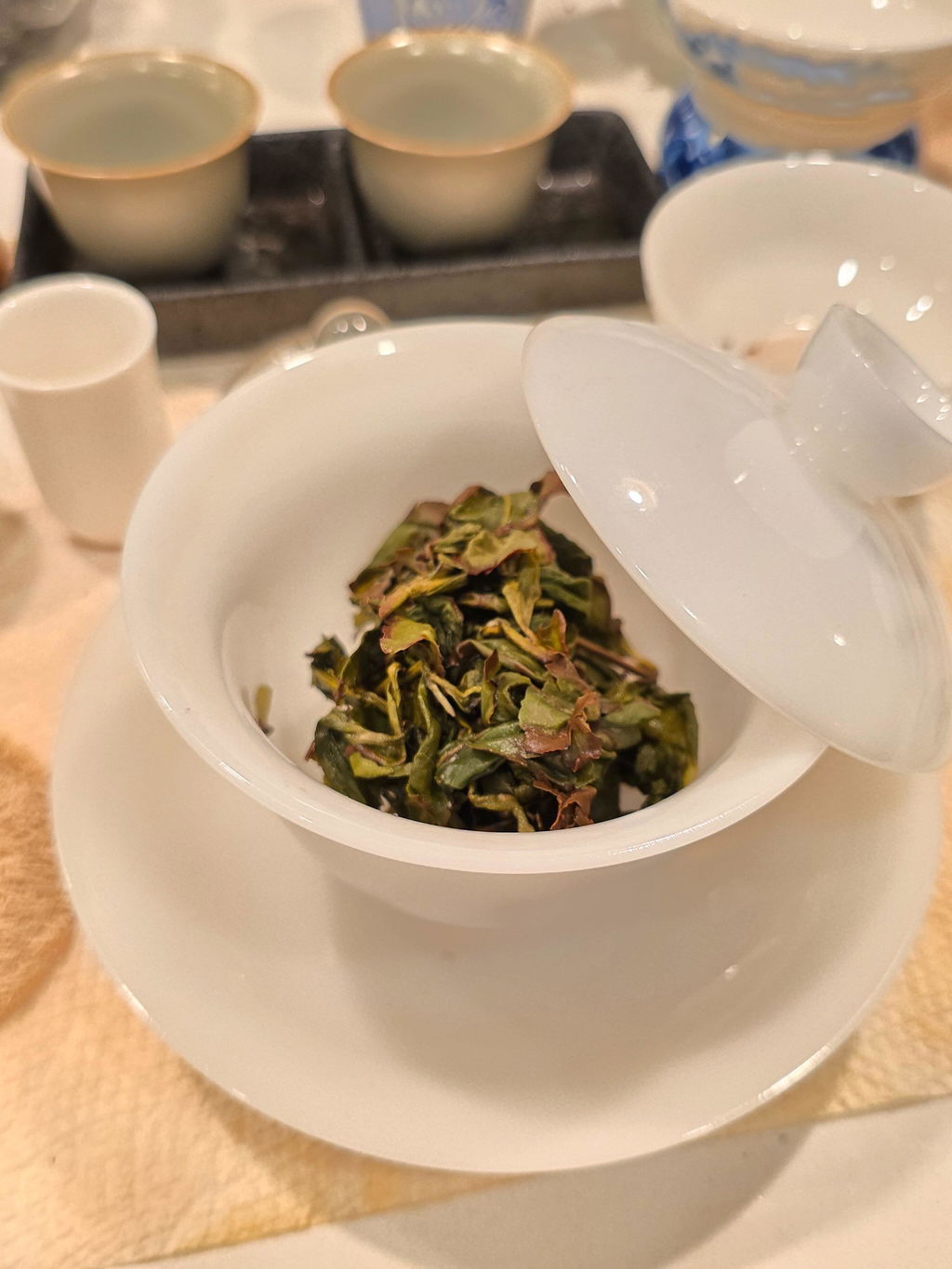
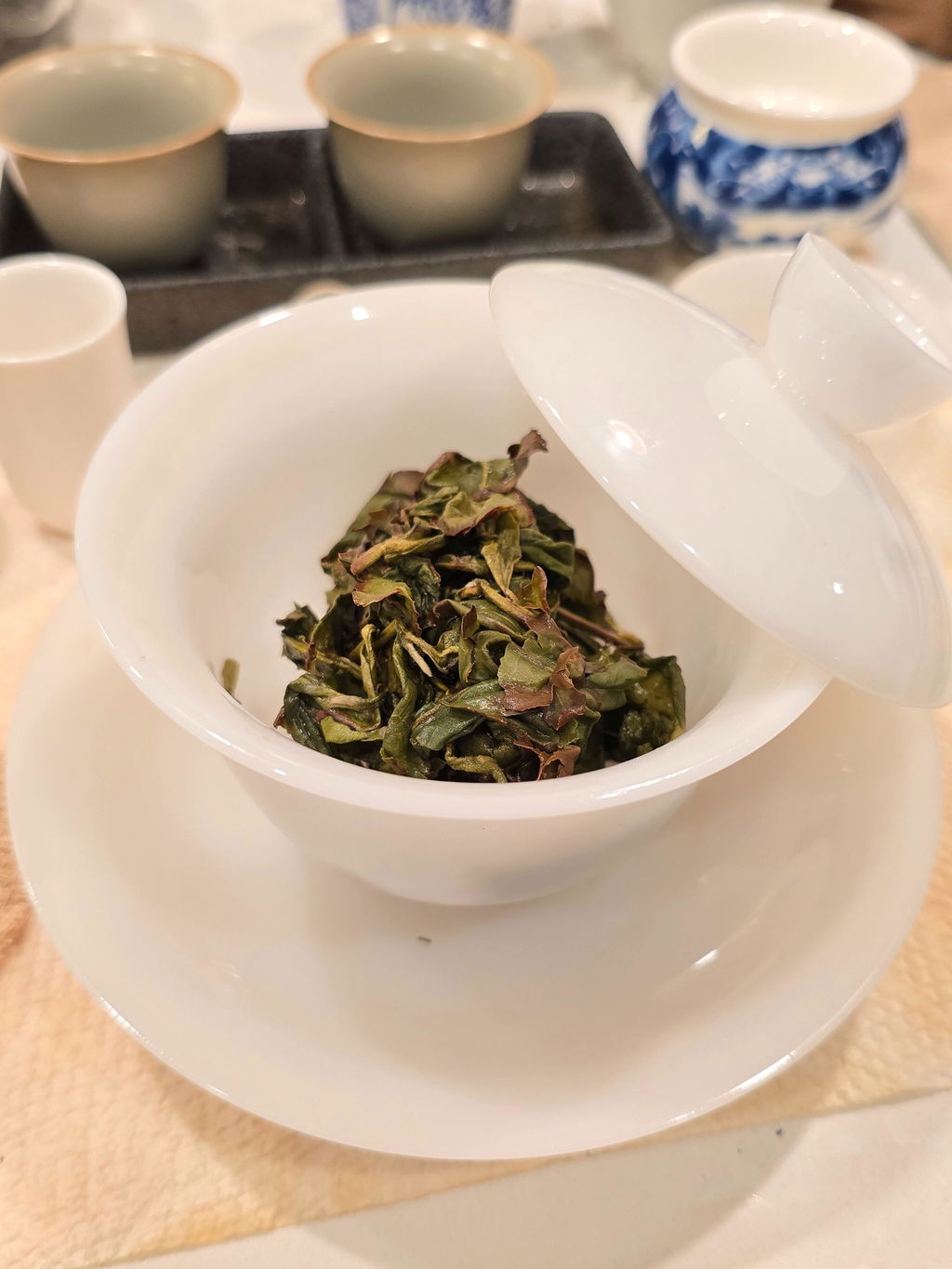
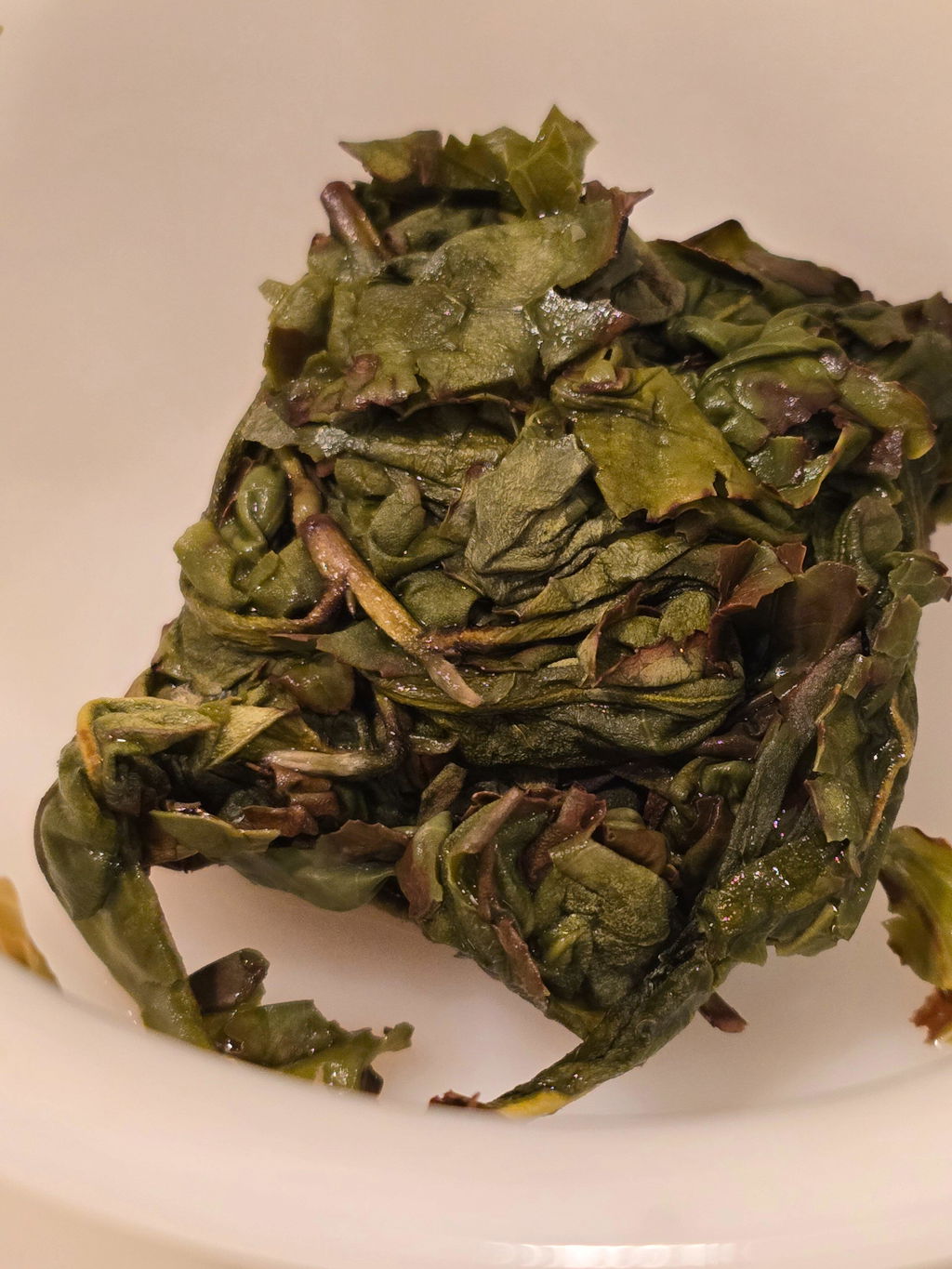
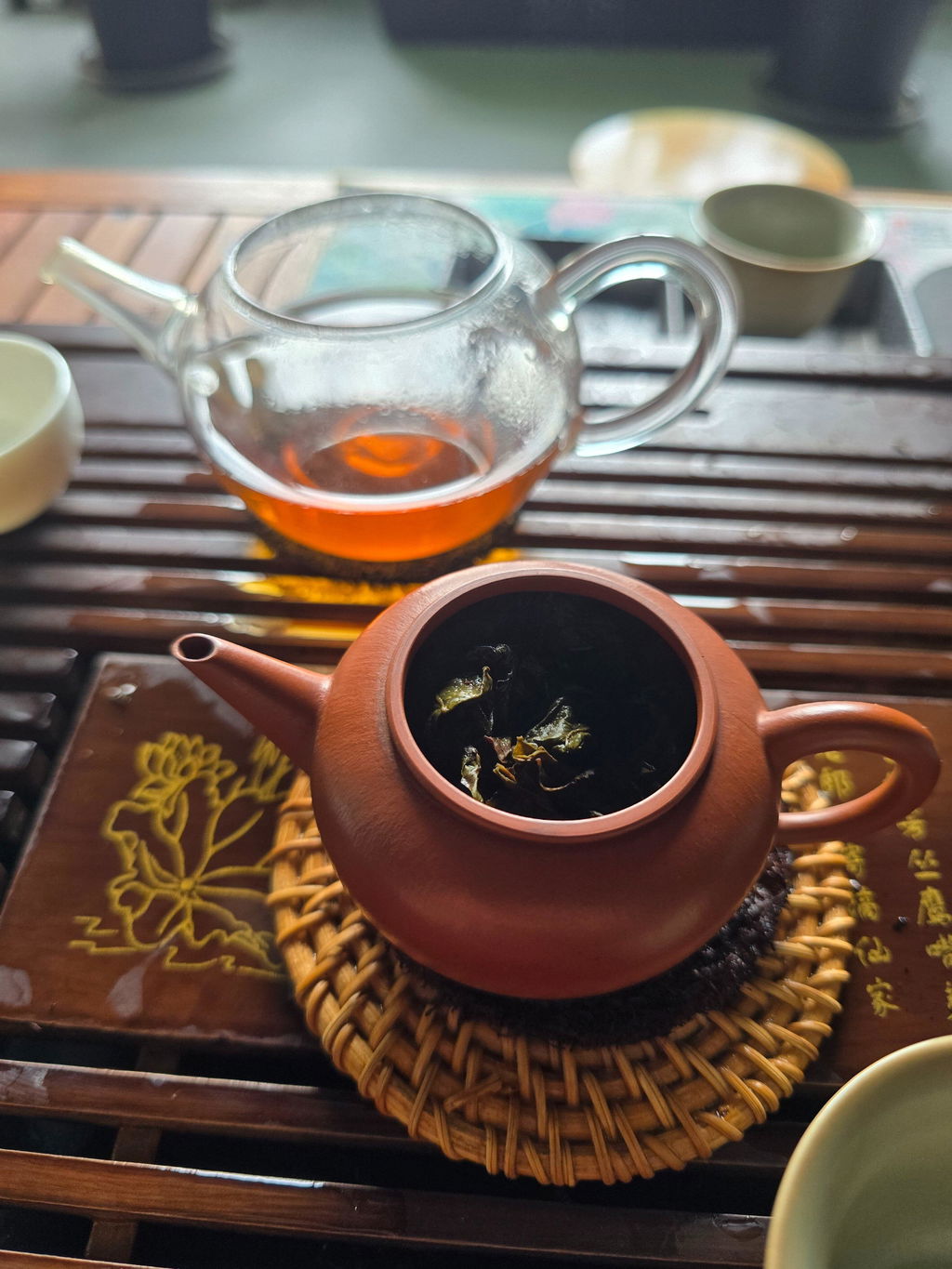
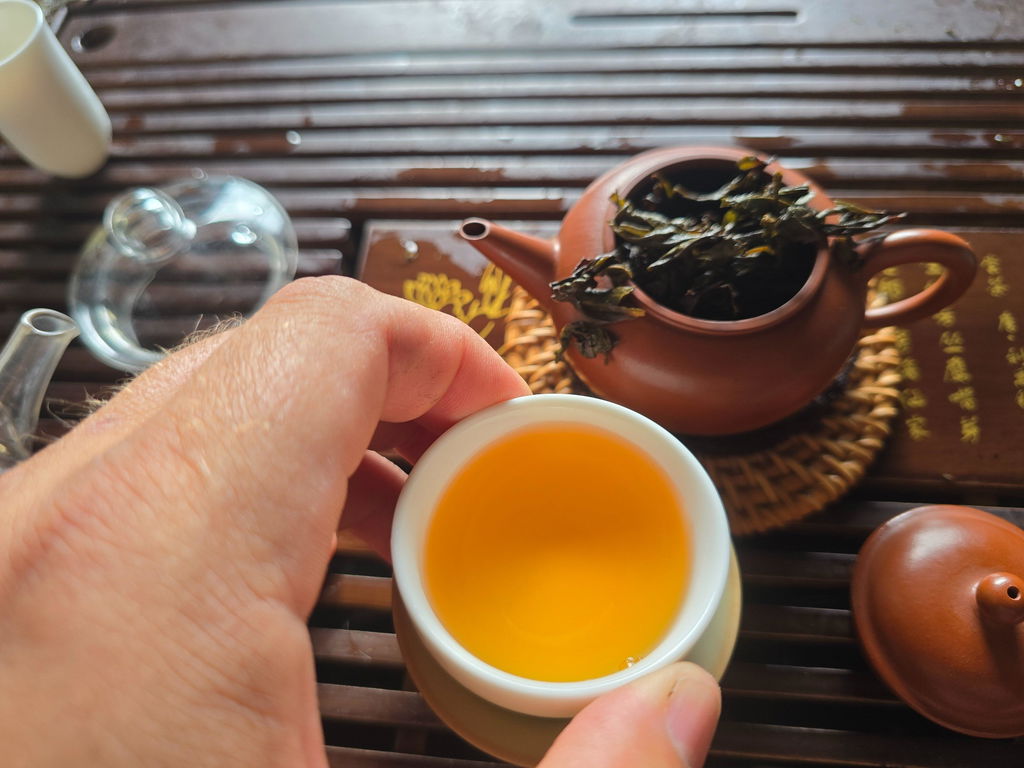
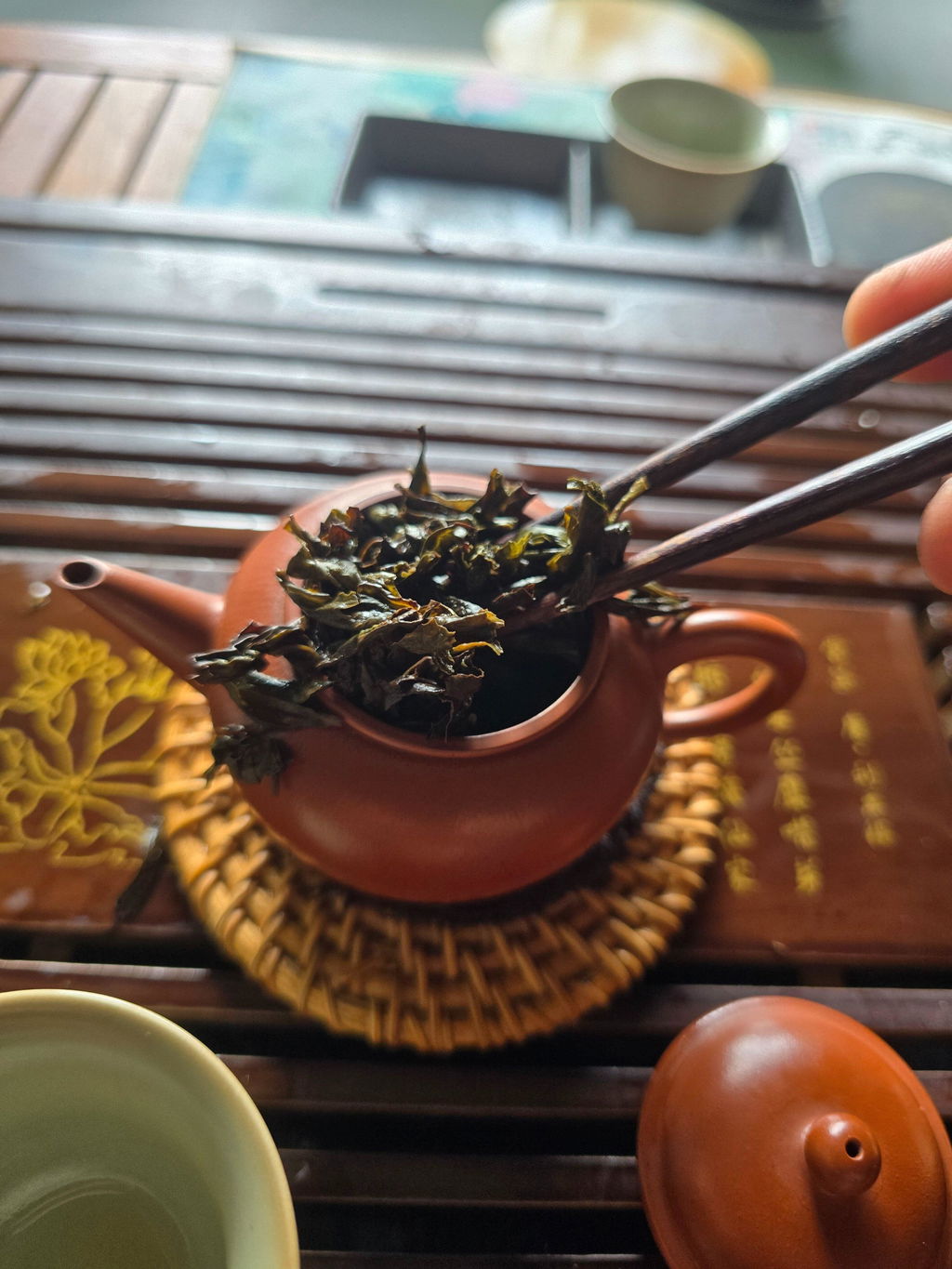
tàn bèi (“charcoal roasting”, “炭焙”) is one of the defining steps in making Wuyi yancha, and also one of the most technically demanding. It plays a central role in shaping the tea’s aroma, texture, depth, and overall character in the cup.
At the same time, charcoal roasting is a dynamic process. It is not simply a matter of setting one temperature and roasting the tea straight through. In practice, the tea maker must keep adjusting heat, timing, and rhythm according to the tea’s condition at each stage. Sometimes the tea needs a gentler, slower roast; at other moments, it may need stronger heat to lift and settle the aroma. The process is responsive rather than mechanical.
At the center of this process is huǒ gōng (“roast level” or “the craft of using fire”, “火功”). But huǒ gōng is not a rigid standard with one universally agreed definition. It is a practical way of describing how a tea has been roasted, and it cannot be judged by temperature alone or reduced to a fixed formula.
This is why experienced tea makers speak of kàn chá bèi chá (“reading the tea and adjusting the roast accordingly”, “看茶焙茶”). They do not rely on a thermometer alone. They judge the roast through the leaf itself, taking into account the cultivar, the terroir, the level of oxidation, the tea’s moisture content, and how the leaves are changing during roasting. In the roasting room, subtle signals matter: the warmth of the leaf, the smell of the fire, the sound of the charcoal, and sometimes even test infusions along the way. What matters in a good tea is not how heavy or light the roast is, but whether the fire has been applied just right.
For that reason, there is no single industry-wide standard for defining huǒ gōng. Any classification of huǒ gōng is only a guide, meant to offer a general sense of the roast rather than a fixed rule.
With that in mind, what follows is our family’s way of classifying huǒ gōng in yancha making, intended to give a rough overall sense of it.
|
huǒ gōng (“roast level”)
|
Temperature
|
Roasting Time (Per Round)
|
|
qīng huǒ (“light fire”, “轻火”)
|
100-110℃
|
8-12 hours
|
|
zhōng qīng huǒ
(“medium-light fire”, “中轻火”)
|
110-120℃
|
10-16 hours
|
|
zhōng huǒ (“medium fire”, “中火”)
|
120-130℃
|
10-16 hours
|
|
zhōng zú huǒ
(“medium-full fire”, “中足火”)
|
130-135℃
|
10-16 hours
|
|
zú huǒ (“full fire”, “足火”)
|
135-145℃
|
8-10 hours
|
Roasting is usually done in one to three rounds, and the length of each round may differ depending on the tea’s condition. These decisions are made through the tea maker’s experience, based on a careful assessment of how the leaves are developing at each stage.